CANIS VIGILPatrol system based on a quadruped robot with a manipulator
Put simply: a robot dog finds abandoned bags and carries them off to a box. A Unitree A2 quadruped robot with an AgileX Piper X arm patrols an airport terminal, spots a bag left without its owner, picks it up by the handle and carries it to a dedicated box — and the operator receives a message with the time, location and a snapshot.
Walkways must stay clear
At an airport, bags left in corridors, at gates and entrances obstruct the flow of passengers and create risks. Today every such bag has to be spotted and moved by a staff member — time taken away from their main job, especially in large terminals.
An autonomous system based on Unitree A2 + AgileX Piper X that can
- patrol a public space and find bags in the camera frame;
- decide whether a bag is abandoned, based on its location, time without movement and people nearby;
- grasp a bag with the arm by its handle or strap;
- carry it to a dedicated box and leave it there;
- report every case to the operator through a monitoring interface.
Goes where passengers go
- Four legs handle thresholds, ramps and uneven floors.
- The robot fits through the same passages as people and walks among them.
- With a lightweight arm and a camera, it becomes a mobile assistant that takes over the routine work.
- Decisions stay with a human: the robot neither opens nor inspects bags.
Airport terminals
Corridors, gates, entrances — the project’s main scenario.
primary targetRailway stations and metro
Waiting halls and passageways with a constant flow of people.
potential useShopping centres and exhibitions
Large areas where an abandoned item is hard to spot in time.
potential useFound, checked, removed
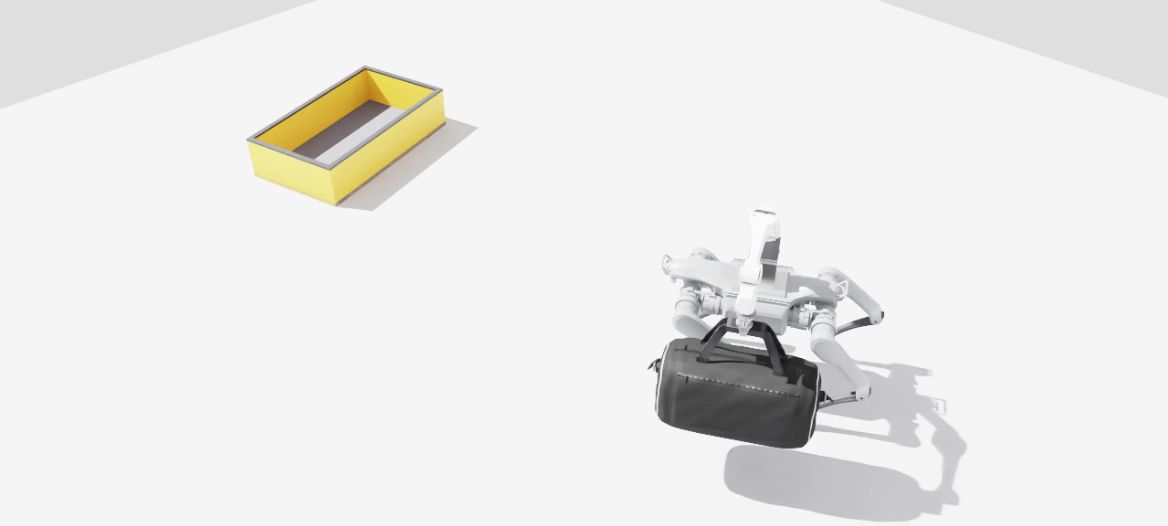
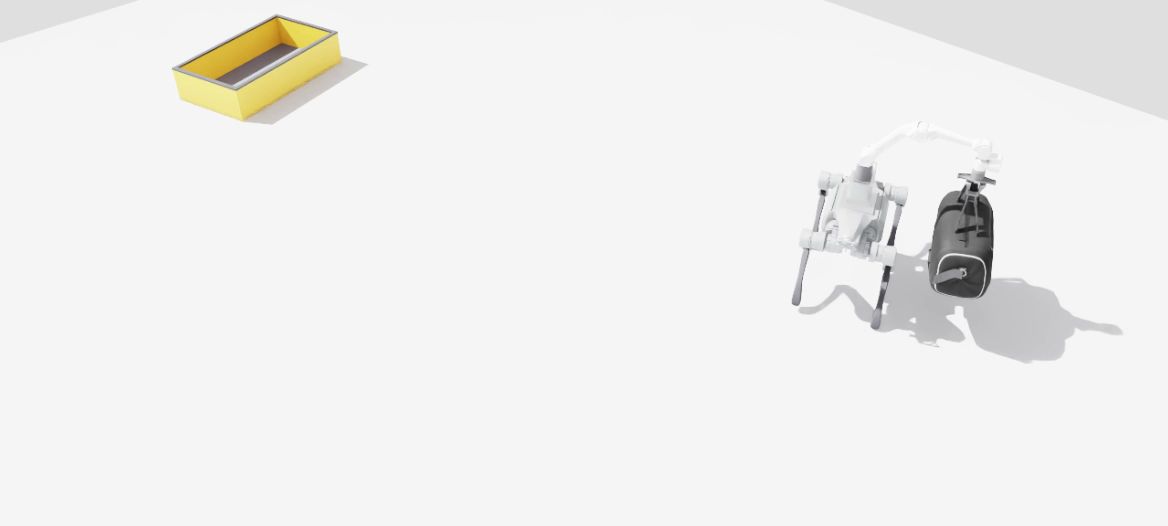
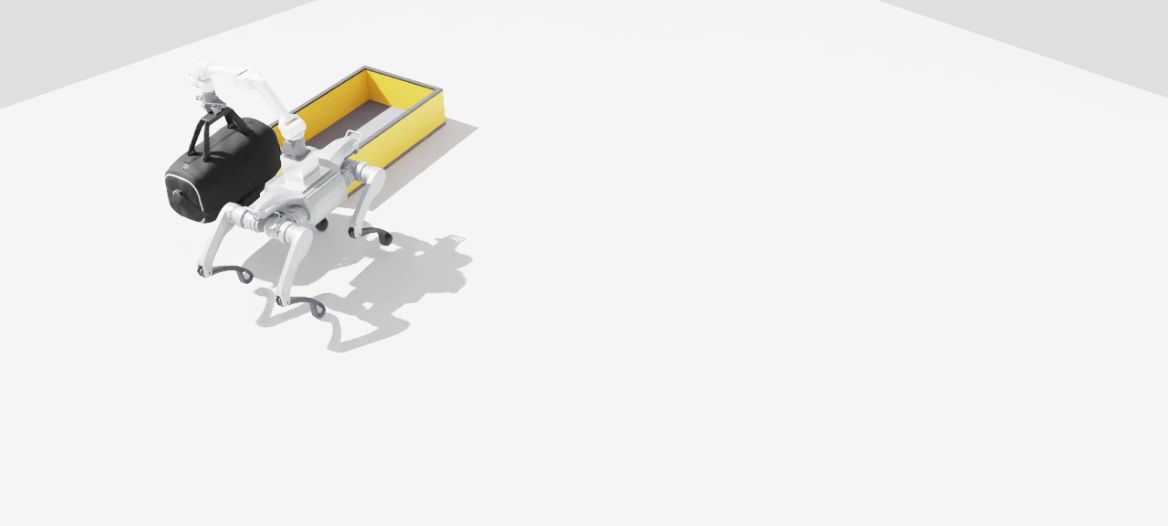
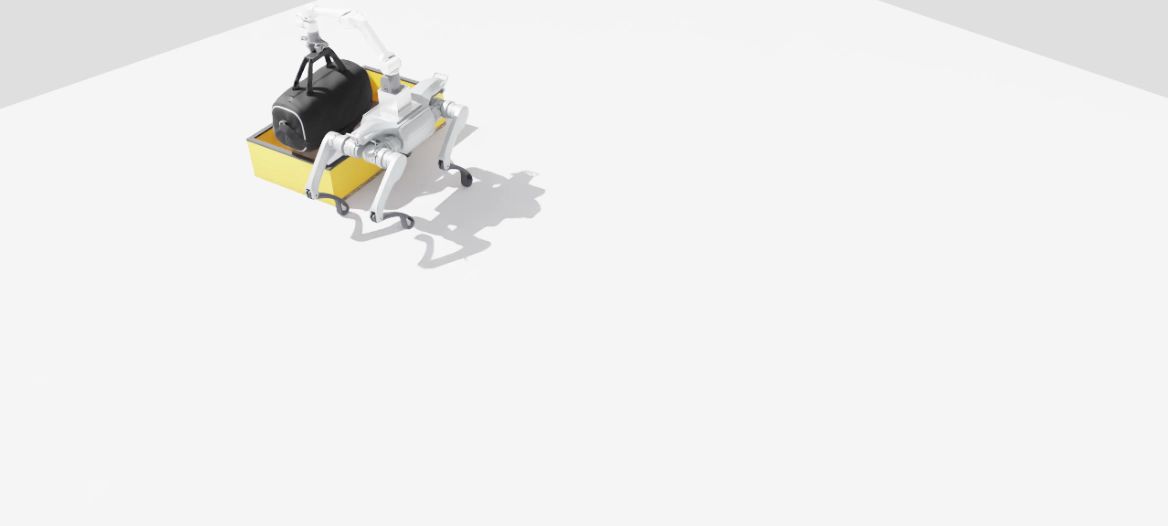
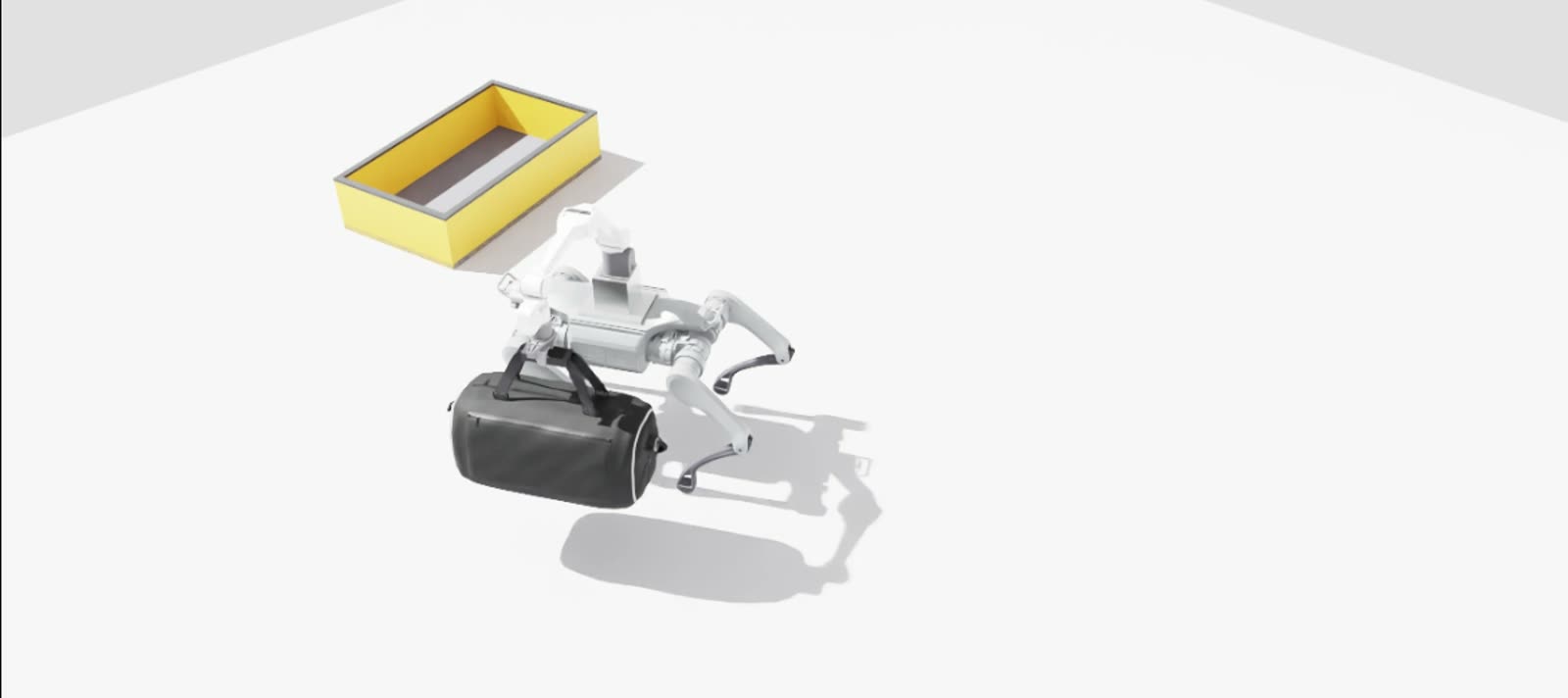
The whole cycle from the project description, in one scene. The A2 robot with an arm patrols a hall, finds a bag, waits to see whether the owner returns, picks it up and carries it off to the yellow box. Rotate the scene with a mouse or finger.
- Patrolroute through the hall
- Detectionbag in the camera frame
- Checkstationary for a while, nobody nearby
- Approachstop at a safe distance, alert the operator
- Graspthe arm grips the handle
- Carryto the box, avoiding people
- Report and returnrelease, log the event, go back
Operator log demo
The animation shows the logic of the cycle step by step. The physics simulation recording is in the next chapter.
Digital twin: bag in the box
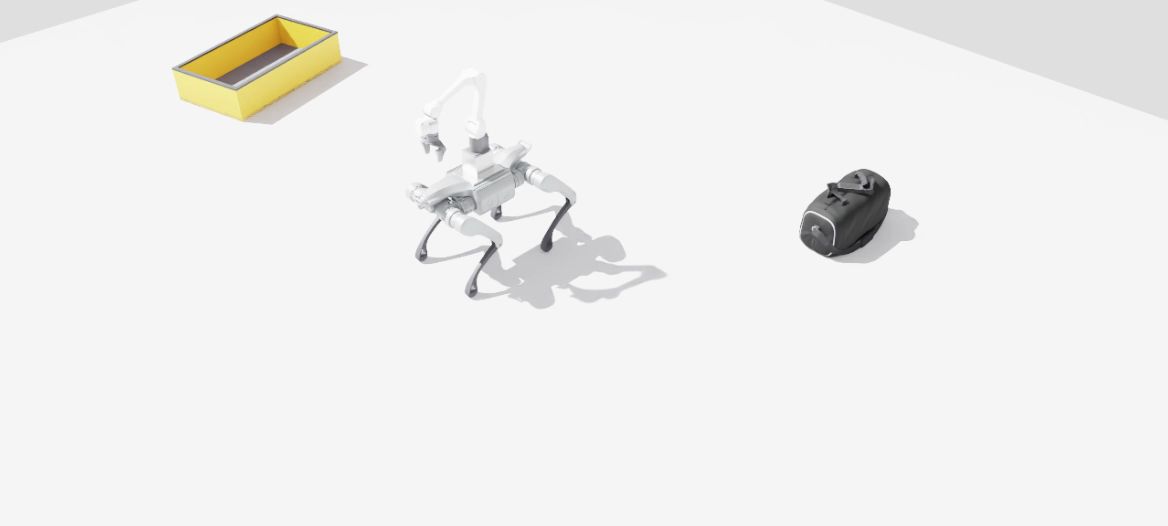
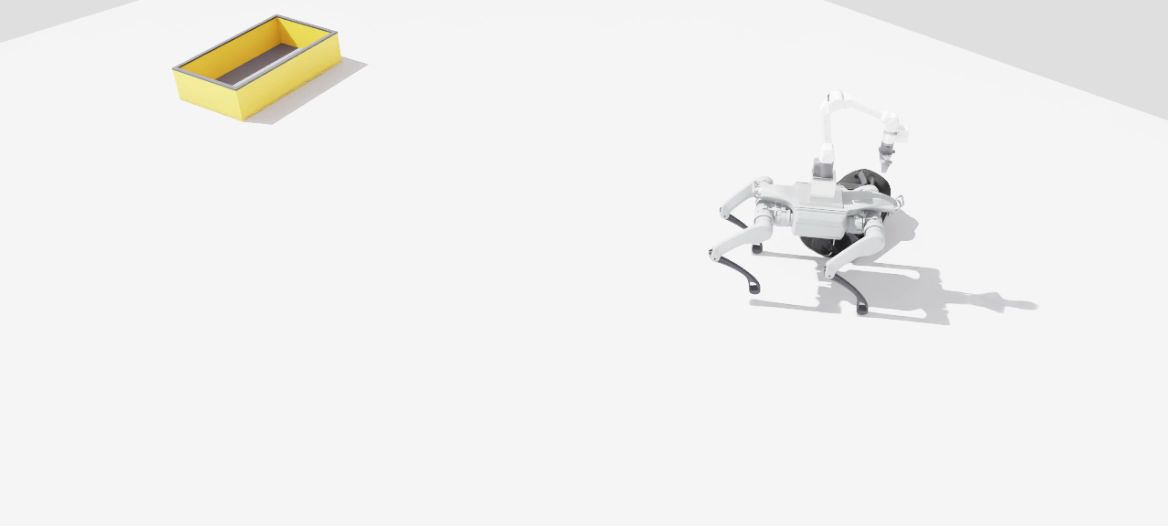
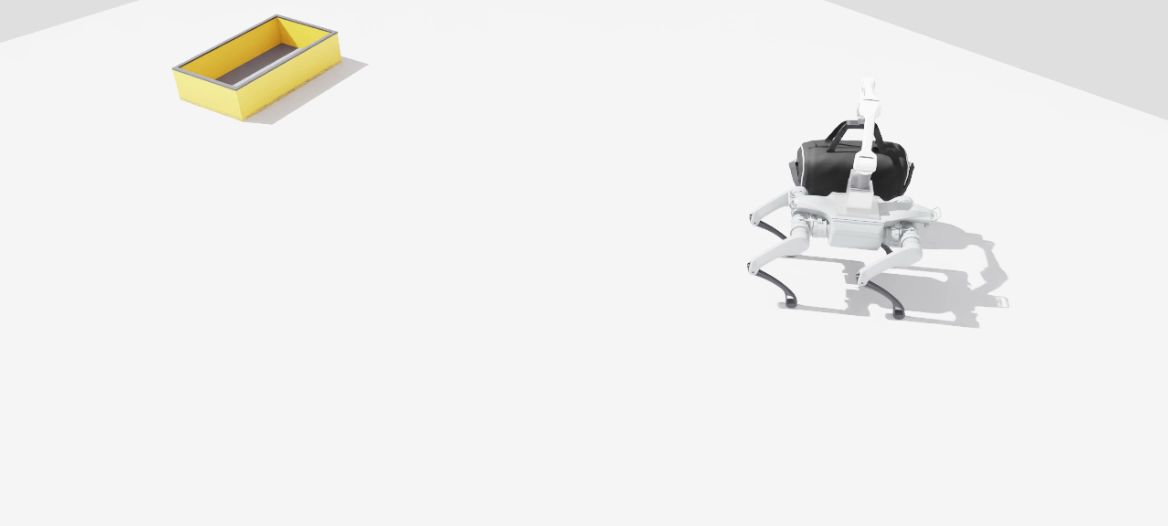
A recording from NVIDIA Isaac Sim at 3× speed: the A2 robot with the Piper X arm approaches the bag, picks it up by the handle, lifts it, turns around, carries it to the box and lowers it inside. Click a stage to jump to it.
From patrol to report
This is the cycle as described in the project. The camera searches for bags continuously; if a bag stays in place for a set time and nobody is nearby, the robot treats it as abandoned.
Modular system: any block can be replaced
Components from the project table. Each one can be replaced or extended without redesigning the whole system.
Unitree A2
Walking platform: patrols the space, carries the arm and the bag.
AgileX Piper X
A lightweight robotic arm on the dog’s back: grips the bag by its handle or strap.
Intel RealSense D435i
Sees bags and people; gives the bag’s 3D position and grasp point.
Onboard computer
Runs vision, navigation and manipulator control.
Box for bags
A designated spot where the robot brings the bags it finds.
ROS 2
Connects patrol, vision, motion planning, grasping and the operator interface.
| Task | Solution |
|---|---|
| Common bus and coordinates | ROS 2 + a live transform tree (TF) linking the robot, the arm and the camera |
| Find the bag | a neural-network detector on the camera image |
| Bag position and grip point | D435i depth data → 3D position and grasp point; hand–eye calibration |
| Arm motion | MoveIt 2 — collision-free trajectory |
| Combined robot model | Piper X mounted on the A2 + a combined URDF digital model |
| Testing before hardware | digital twin in NVIDIA Isaac Sim: walking, grasping and carrying are tested before running on the real robot |
Human in the loop
The robot takes over the routine — spotting, carrying, logging. Decisions and control stay with the operator.
Does not open bags
The robot does not open the bag or inspect its contents — it only moves the bag to the box.
Keeps its distance
Stops at a safe distance from the bag and from people; on the way to the box it goes around people and obstacles.
Operator in charge
The operator receives every event and can stop the robot or take control at any moment.
Six tasks of the project
The main tasks of the project. The mark means what is already shown in the simulation.
A working prototype that
- finds bags in a public place and recognises abandoned ones;
- picks up a bag and carries it to a dedicated box;
- reports every case to the operator;
- serves as a platform for other order-keeping tasks.
Less manual routine
The system could become the basis for relieving airport staff of manual work with abandoned bags and keeping walkways in busy terminals clear.
The team behind the project